

The biggest shift in aesthetics right now is that practices are broadening their scope, bringing medical weight loss, wellness, regenerative and longevity-focused care into the fold as part of a more comprehensive, whole-person approach.
On February 27, 2026, U.S. Health Secretary Robert F. Kennedy Jr. sat down with Joe Rogan and said something that should matter to every med spa clinic in the country.
He announced plans to move approximately 14 injectable peptides—including BPC-157, Sermorelin, CJC-1295, and Thymosin Alpha-1—off the FDA’s banned list.
What this means in plain English:
Licensed pharmacies will soon be able to legally produce these peptides again for patients with a valid prescription.
This isn’t a slow-moving trend. It’s a regulatory event with a hard timeline.
And it’s landing in the middle of the fastest-growing segment in healthcare.
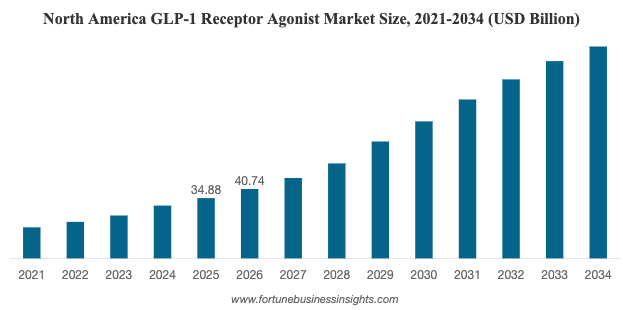
Fortune insights projects the global market for GLP-1s alone will hit 254 billion by 2034.
Peptides are the next chapter in that same story—cash-pay, longevity-focused medicine that patients are actively seeking out and willing to pay for out of pocket.
What Happens Next
Since the FDA restricted these peptides in late 2023, patients didn’t stop wanting them. They just started buying them from gray markets…
…unregulated online sellers, foreign supply chains, and research peptide loopholes that technically prohibit human use.
The quality is unknown. The dosing is inconsistent. The patients taking them know it.
When legal access returns through licensed clinics, a large portion of that demand shifts back to where it should have been all along: a local, qualified provider with a prescription and a proper supply chain.
On top of that, RFK Jr. made this announcement to one of the largest audiences in the world.
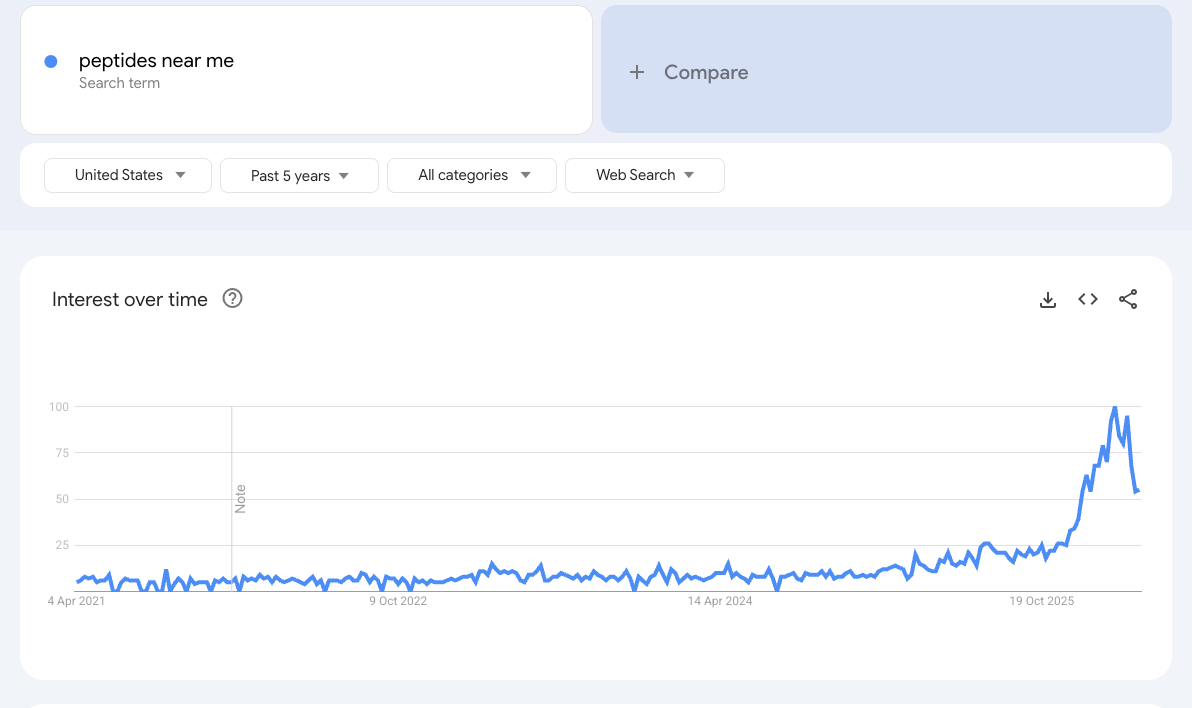
Millions of people who’d never heard of BPC-157 now have. A new wave of peptide-curious patients is waking up and asking questions.
Here’s what they’re going to do next.
They’re going to open Google and search for a clinic near them.
Who’s Actually Coming Through Your Door
Joe Rogan’s audience is not your typical aesthetics patient.
It skews heavily male—men in their 30s, 40s, and 50s who think about their health through the lens of optimization.
Think more in terms of biohacking, and less beauty.
They track their labs. They listen to Peter Attia. They already know what peptides are. They’re not looking for a facial. They’re looking for an edge.
This is the patient the peptide wave is sending to med spas, and most practices aren’t ready for them.
That’s the opportunity.
Why This Patient Is Already a Fit for Your Services
Here’s what makes this demographic a natural fit for med spas specifically.
The male optimization patient isn’t coming in for a dramatic overhaul. He’s not looking for surgery. He wants to optimize what he already has, and compound those results over time.
That’s a patient your existing service menu was built for.
Body Sculpting
The peptides generating the most interest, CJC-1295, Sermorelin, Ipamorelin, are used primarily for fat loss, muscle composition, and recovery.
The goal is straightforward: lose fat, build muscle, get closer to that six pack.
Peptides work from the inside out.
Body sculpting treatments work from the outside in. Together, they’re a more complete protocol than either delivers alone—and that’s a conversation a male optimization patient is primed to have.
Hair Restoration and PRP
Body composition isn’t the only thing on his mind.
Hair loss is one of the most common concerns among men in their 30s, 40s, and 50s.
These patients aren’t waiting until they’re visibly thinning to take action. They’re looking to get ahead of it.
Peptides support hair health from the inside. PRP supports it from the outside. If your practice already offers PRP treatments, you have a natural conversation starter with a patient who walked in for peptides and is now asking about everything else you do.
Both services—body sculpting and hair restoration—become natural upsells in a personalized monthly protocol. Which is where the real revenue model starts to take shape.
What Patients Are Already Searching For
Here’s something most clinic owners get wrong when they think about SEO (search engine optimization).
They assume patients are searching by compound name, typing “BPC-157” or “CJC-1295” into Google.
Some are. And as public awareness increases, more will…
But for now, the majority of patients searching aren’t thinking in terms of specific peptides.
They’re thinking in terms of outcomes.
Mainly, they want to lose weight. Recover faster. Get ahead of hair loss. Feel like themselves again.
Based on the keyword research I’ve done in several markets, this is what they type into Google:
“peptide therapy [city]/ near me”
“medical weight loss [city]/ near me”
“peptide therapy for weight loss [city]/ near me”
“GLP-1 [city]/ near me”
“peptide injections [city]/ near me”
This is where you start.
With a dedicated service page on your website, optimized around these exact search terms, that makes it crystal clear what you offer, who it’s for, and how to book.

The population is already getting educated—by Joe Rogan, Andrew Huberman, and every biohacking podcast that’s covered this story.
You don’t need to do that work.
What you need is to be the obvious local answer when a patient who’s already sold on peptide therapy opens Google and types “near me.”
Now, some of those patients will have questions before they book.
That’s fine. The easiest way to handle it isn’t a separate content strategy—it’s a FAQ section at the bottom of your service page.
Answer the questions they’re already asking:
What are peptides and how do they work?
Is peptide therapy safe?
How is this different from buying peptides online?
Do I need a prescription?
One well-built service page does both jobs.
It captures the patient who’s ready to book today. And it earns the trust of the patient who needs a few more answers before they pick up the phone.
FAQs also help your clinic rank in local search.
Why Google Is the Right Channel for This
When a patient types “peptide therapy near me” into Google, something important happens.
They’re ready to call and book. Today.
They already know WHAT they want. They just need to decide WHERE to buy it from.
That’s the highest-intent patient you can attract—and they’re specifically looking for someone local.
Unlike Instagram or Facebook, where you’re interrupting someone mid-scroll competing for attention against cat videos and holiday photos, these patients are actively looking for you.
The Psychology of Being First
Google only displays 3 clinics for local searches. This is called the Map Pack.
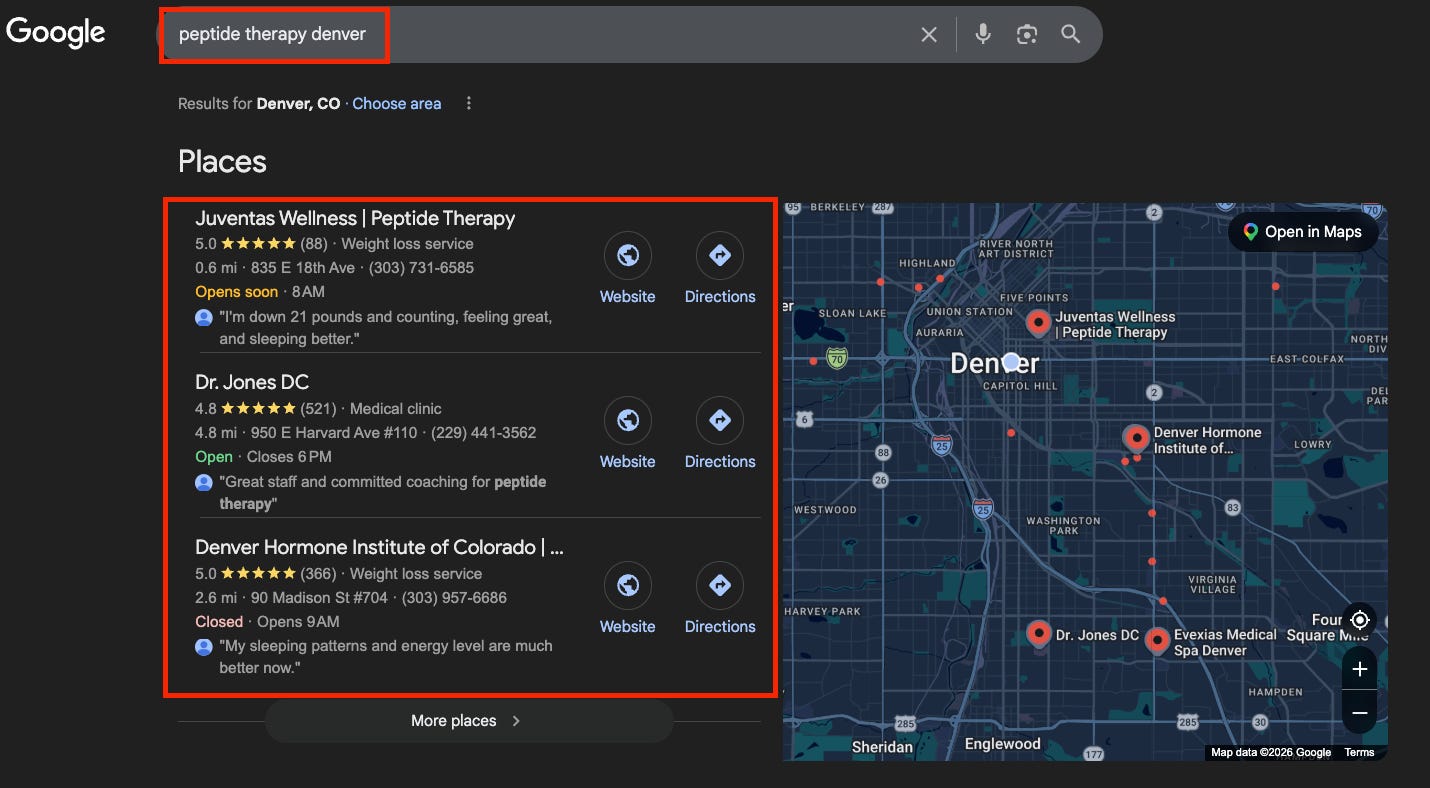
According to SEMRUSH, businesses in the Map Pack get 126% more traffic and 93% more calls—and it’s not just Google’s algorithm. It’s human psychology.
It’s a cognitive bias called anchoring.
When the brain encounters a list of options, it doesn’t evaluate each one independently. It anchors to the first option and uses it as the benchmark for everything that follows.
Grocery stores exploit this constantly. Products placed at the end of an aisle—in that prime first-glance position—outsell the same products shelved further in. Not because they’re better. Because they were seen first, and the brain treated position as a signal of value.
The Google Map Pack works the same way. Three results. Three clinics that get anchored as the obvious choice before the patient has read a single word about them.
4 Things You Can Do to Get Started Right Now
Here’s where to start if you want peptide patients finding you before they find your competitors:
1. Get your medical structure in order.
Peptides require a physician’s prescription. If you’re an MD, you’re ready to go. If you’re not—if you’re an NP, RN, or aesthetician-owned practice—make sure you have a medical director in place before the window fully opens. The marketing opportunity is real, but you need the clinical foundation to back it up.
2. Update your Google Business Profile.
Add ‘peptide therapy’ as a service. Use the terms patients are actually searching: “peptide therapy,” “peptide injections,” “peptides for weight loss“... and not just treatment names your patients have never heard of. Google needs to speak the same language your patients are typing.
3. Build a dedicated service page on your website.
Add a service page to your website optimized around the specific search terms patients are already using. (Eg: Peptide Therapy, Medical Weight Loss). The details live on this page. Explain the treatments, the different peptides, and answer common questions, giving patients the confidence to call.
4. Ask patients to mention peptide therapy in their reviews.
Reviews that contain specific treatment names are a local search signal most clinic owners never think to ask for. It matters more than most people realize.
Getting Them In The Door Is Just The Beginning
Acquiring a peptide patient through Google is really only the first step.
The practices that will build real, lasting revenue from this wave aren’t thinking about one-off injections.
The real money is in a monthly membership.
Instead of marking up the cost of the injection and calling it a day—which doesn’t add much value to the patient anyways—wrap the service into a cash-pay monthly subscription.
Typically priced between $299 and $499 per month.
What that includes: the medical consultation, prescription management, pharmacy routing, and the real value drivers:
nutritional coaching
progress tracking
results management over time
For the male optimization patient, this isn’t a hard sell.
These are men who already pay for Whoop, an Oura ring, Eight Sleep, and an Apple Watch.
And remember that you can create even more personalized plans that include body sculpting and PRP for their weight loss and hair loss goals.
A monthly protocol managed by a qualified local provider—with someone accountable for their results, is exactly the kind of system they’re looking for.
And for your practice, it’s predictable recurring revenue that compounds as your patient base grows.
Getting them in the door is the acquisition problem. Google solves that.
Keeping them, and building a business around them, is the retention problem. The membership solves that.
You’re Still Very Early
The incoming peptide wave is a potential gold rush that is just getting started, and the male aesthetics patient is largely untapped in most med spa markets.
The biggest opportunity belongs to established med spa clinics that can extend their services and build peptide protocols into their membership packages.
You don’t have to create the demand. It already exists.
The question is whether your clinic is the one patients find when they start looking—and whether you have a system in place to keep them once they do.
That’s all for today.
Take care.
Nicholas
Never Worry About Empty Treatment Rooms Again.
When you dominate local search, you effectively build a system that attracts high-value patients consistently. (Think Botox, PRP, peptides, CoolSculpting, etc… and not price shoppers.)
It’s like setting up an insurance policy that secures your clinic’s growth in the long run because you’ll be visible to patients who are actively looking for the services you offer.
And the longer you dominate the local search results, the more established and recognizable your med spa becomes. (I call it the compound interest of SEO effect.)
Get your Free Local SEO Report and find out exactly where you stand right now.
Here’s what you’ll see:
Where you rank compared to your top local competitors
What patients in your area are actually searching for right now
The gaps that are sending high-value patients to other clinics
Afterwards you’ll have practical, actionable insights you can act on. No commitment. No sales call. Just your data.